

03FEB25- "Pres Daniel Noboa Orders Militarization of Ports and Announces Border Closure from February 8 to 10
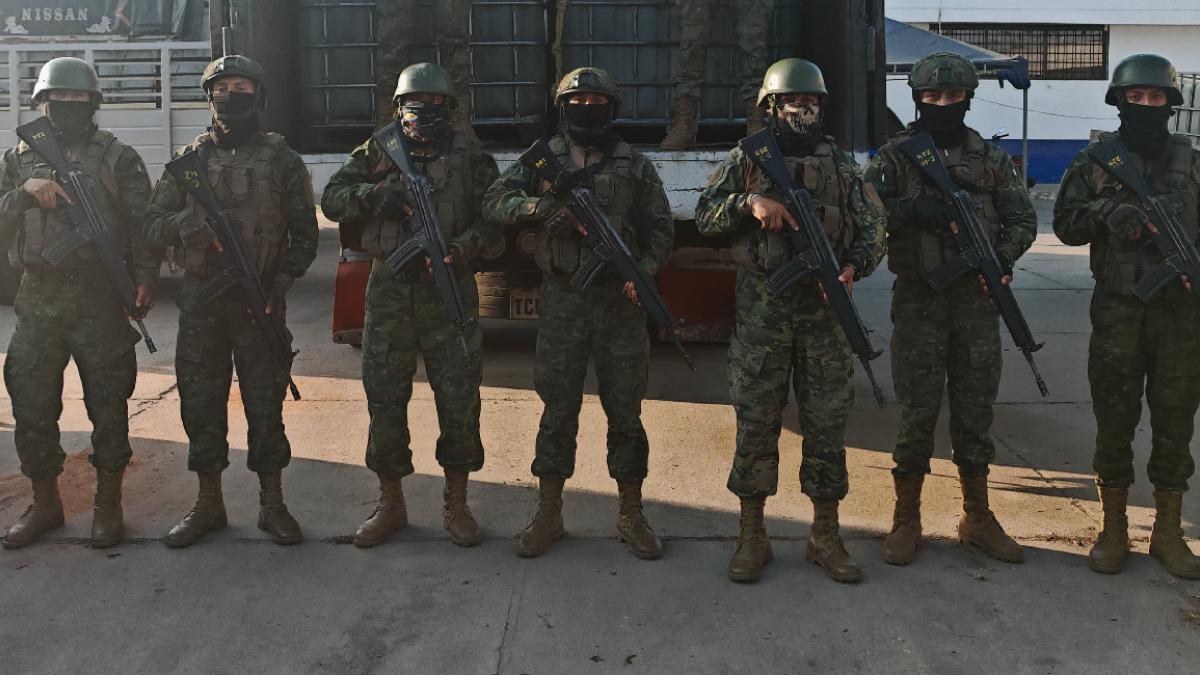
The President of Ecuador, Daniel Noboa, made these announcements "in response to attempts to destabilize by armed groups": militarizing ports and reinforcing security at borders.
Less than a week before the general elections in Ecuador, President Daniel Noboa accused "attempts at destabilization by armed groups," prompting him to "militarize the ports immediately" and reinforce security measures at the borders with Colombia and Peru.
Noboa made this surprising announcement on his social media, following recent violent incidents that caused a stir in Ecuador, such as the case of a baby found crawling in an area of Santa Elena, where her mother had been murdered.
Additionally, the president announced the closure of the borders "from Saturday, February 8, to Monday, February 10" in Ecuador, meaning one day before and one day after the general elections.
In this regard, Noboa gave these instructions to the Security block, composed of military personnel and police:
1) Militarize the ports immediately.
2) Reinforce the military presence at the northern and southern borders of the country. Due to the destabilization attempts by armed groups, the borders will remain closed from Saturday, February 8, to Monday, February 10.
Since January 3, the government has declared a state of emergency in seven provinces of Ecuador and three cantons, including Quito, for 60 days due to increased criminal hostilities.
On February 9, Ecuadorians will go to the polls to elect a new president, assembly members, and Andean parliamentarians for the coming years. In these elections, Noboa is seeking re-election...." -
🤠iffin you gonna move down or remain in Ecuador on into 2025, get prepared for whats a coming down the pike🥷🏼its not and has not been just a Coastal & #GYE thang, its also a Sierra & Metro #Quito Thanggy as well👮🏻♂️💰
My 2025 NewYears Resolution is more time out on the La G range, zz style, 🎸🥁🎸 cuzz (imho) we gonna dang sure be a needin it🥷🏼if anybody wants to no longer be an outlaw? Call me to join our Qtowne Quito gun club and get legal to tote with a 55hr CCW Course,
now a days The CCW is pretty much streamlined down to this:
plan on about $300 for to join the gun club,about $200 or up to $300 for the CCW course,about $300 for psyche, psycho and toxico exams,
a 9mm Taurus for say $1200.
a 9mm CZ for say $1500.
aprox $80 to $100 for a box of 50rds 9mm FMJ
i see peeps now a days getting legally armed in about a 3-4 months time frame, kinda like a tuff assed visa process!
'Always be prepared' - BSA & SA,
"When guns are outlawed, only outlaws will have guns" - Louis L'Amour (1908-1988) Western novelist of ...

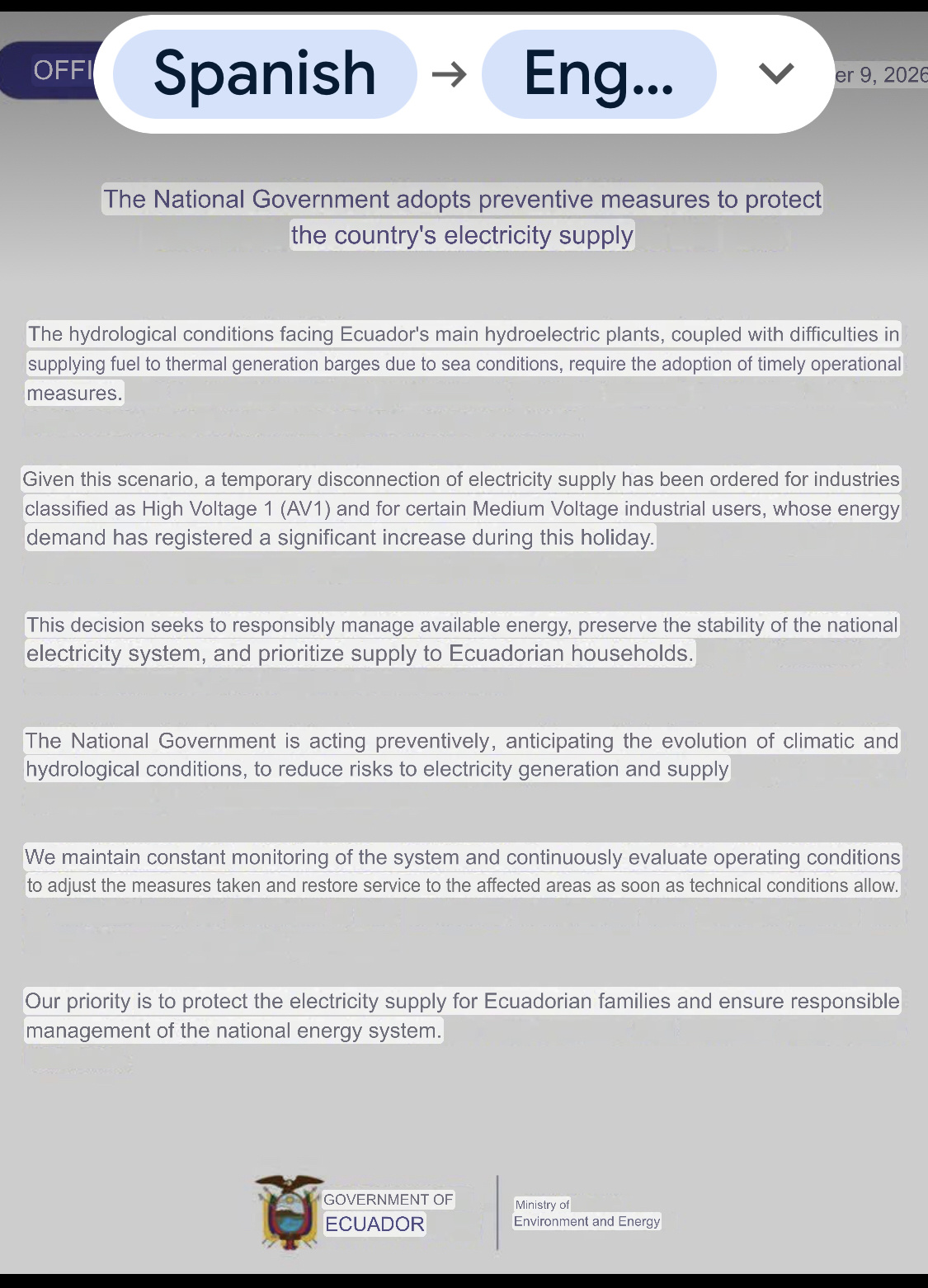
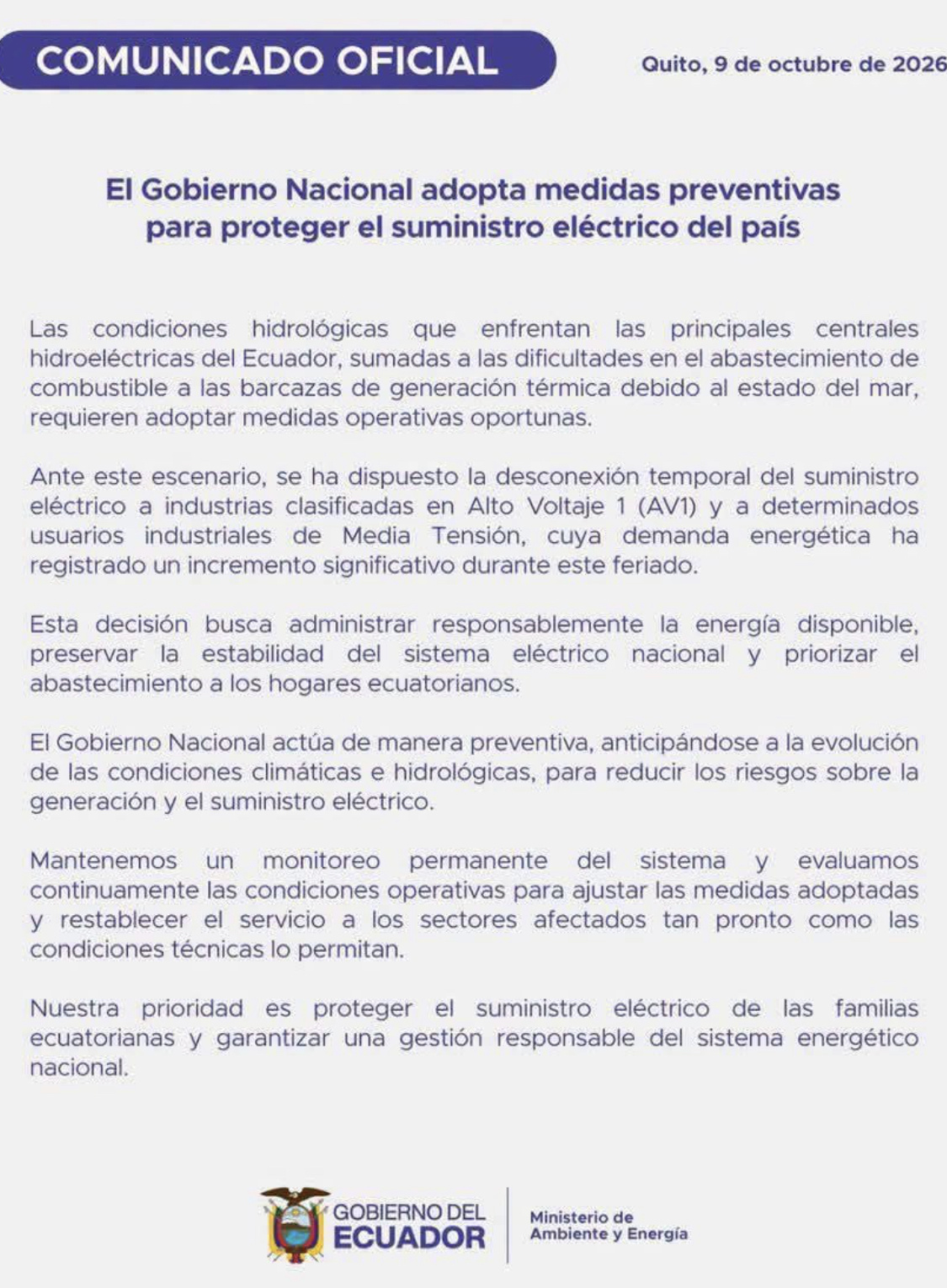
09OCT26 (23:15)🚨'Alert ECUADOR ORDERS TEMPORARY DISCONNECTION OF ELECTRICITY SUPPLY TO CERTAIN INDUSTRIES
⚡ "The Ministry of Environment and Energy announced that it has ordered the temporary disconnection of electricity supply to industries classified as "High Voltage 1" and to specific "Medium Voltage" industrial users, due to current conditions within the national electrical system.
📢 According to the statement, the measure is a response to hydrological conditions at power generation plants and difficulties in supplying fuel to power-generating barges caused by sea conditions.
🏠 What is the goal of this decision?
According to the authorities, the measure aims to prioritize electricity supply to Ecuadorian households while operational limitations persist.
🔌 Service restoration for the affected industrial users will take place once technical conditions allow, the Ministry reported.
⚠️ ATTENTION: The information provided does not specify the duration of the measure or the full list of ...
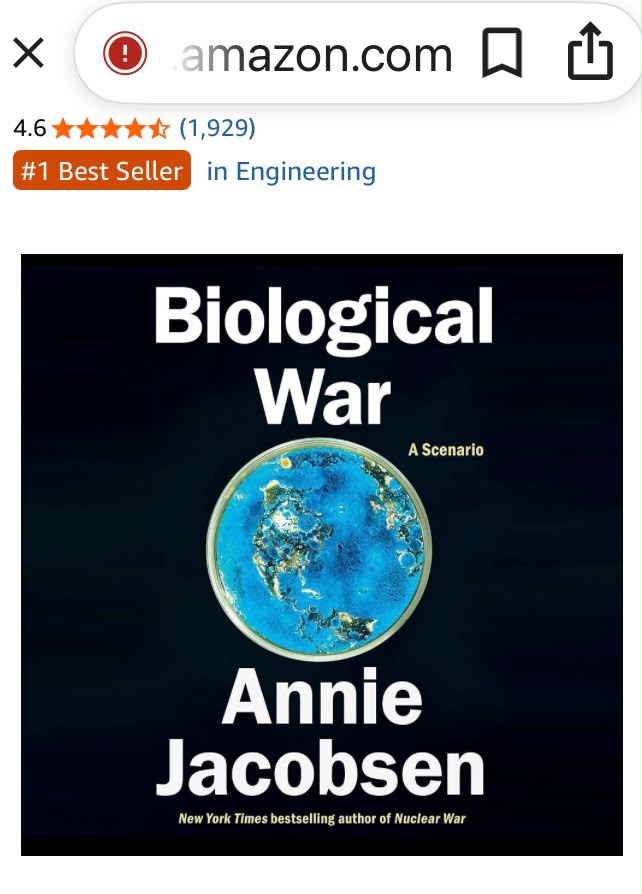
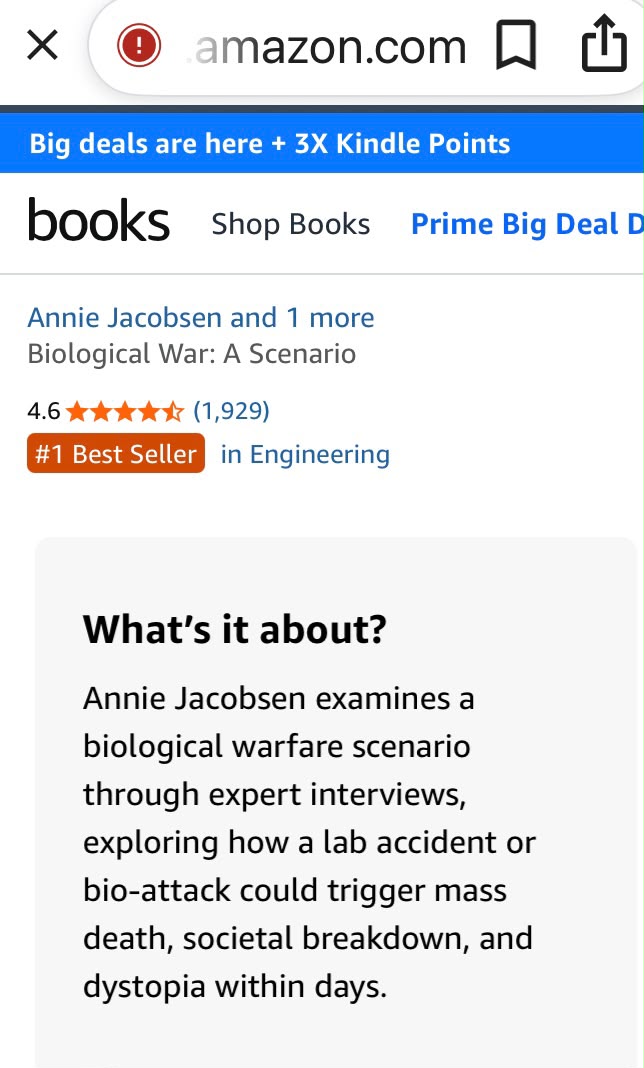
28JUL 2026☣️ 'Biological War: A Scenario' is a 2026 nonfiction book by American investigative journalist Annie Jacobsen.
Published in the United States by Dutton on July 28, 2026, the book examines the potential consequences of a large-scale biological attack or the accidental release of an engineered pathogen.
The book uses a fictional near-future catastrophe to describe how governments, health systems, armed forces and civilian populations might respond to the rapid spread of a highly lethal biological agent.
It combines the fictional scenario with accounts of historical biological-weapons programmes,
interviews with scientists and national-security officials, and discussion of advances in genetic engineering, synthetic biology and 👾artificial intelligence.
It is a thematic successor to Jacobsen's 2024 book -
🚀
Nuclear War: A Scenario, which employed a similar narrative technique to describe the escalation of a hypothetical nuclear conflict!..." -
☢️
...